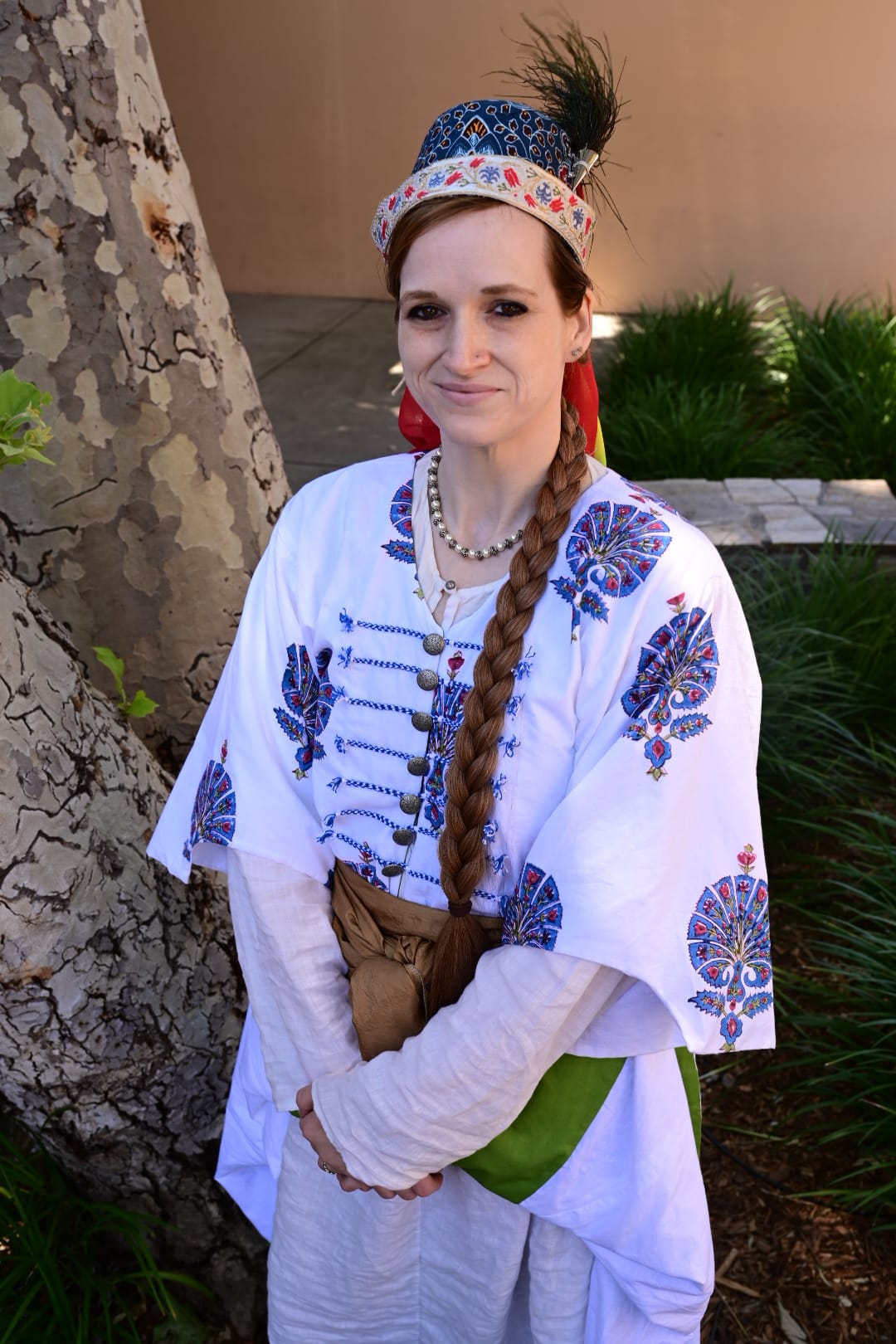
The caftan is a versatile garment worn by various cultures throughout history, but the Ottoman caftan is particularly notable for its distinct characteristics. These unique features not only reflect the aesthetic preferences of the Ottoman Empire but also demonstrate the intricate craftsmanship involved in creating such garments. While you may see similar elements in caftans from other regions or time periods, it’s the combination of these specific details that truly defines the Ottoman style and can really set your Ottoman garb apart. This guide will help you understand these key features, making it easier for you to recreate an authentic Ottoman caftan as part of your SCA garb.
Sleeves
Ottoman caftans are known for their distinctive sleeve styles, which contribute to the garment’s unique silhouette. One of the most recognizable features is the half-length sleeve with a rounded cutout at the front of the arm. This design allows the wearer to bend their arm comfortably while maintaining coverage over the elbow, creating a graceful drape. The rounded cutout not only adds a functional element but also gives the sleeve an elegant and distinctive shape when worn, setting it apart from sleeves found in other cultures and periods.
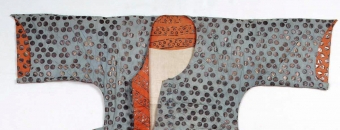
This image shows the sleeve cut outs
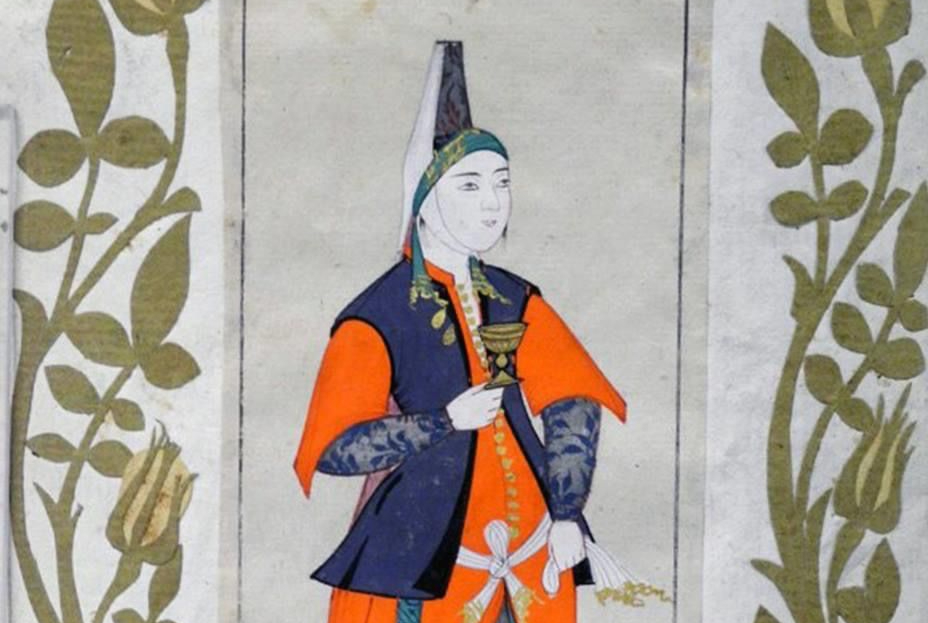
Notice the unique shape hanging from the elbow.
Gores
A key feature of Ottoman caftans is the use of multiple gores in their construction, which provide both structure and volume. Unlike caftans from other regions, Ottoman caftans often include two front gores in addition to the side gores. These front gores are strategically placed on either side of the opening, running from the neck to the hem or starting lower at the waist or hip. The inclusion of front gores not only enhances the fullness of the caftan but also offers additional coverage in the front of the garment.
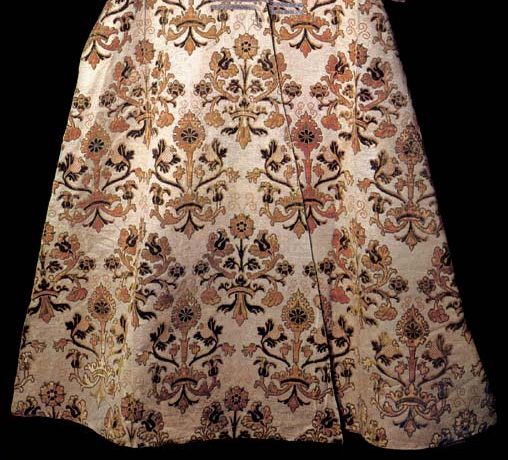
Detail, showing overlapping front gore
Caprast
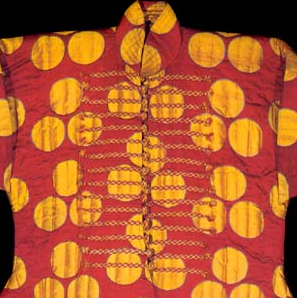
The caprast (or kaprast) bands are another hallmark of Ottoman caftans, serving both decorative and functional purposes. These woven trims are typically found along the front edges of the caftan, stabilizing the fabric while also providing a base for button loops. The caprast bands are often tablet woven or braided. They provide a structural element, as well as an additional decorative element.
Facings
Ottoman caftans are typically lined and feature contrasting facings that add a pop of color and visual interest to the garment. These facings run along the hem and up the front opening of the caftan, often revealed by tucking up the ends of the garment.
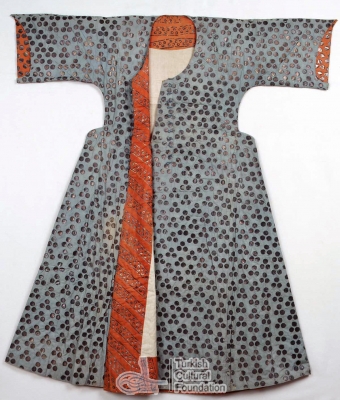
This caftan is decorated with silver leaf, including the contrasting orange facing.
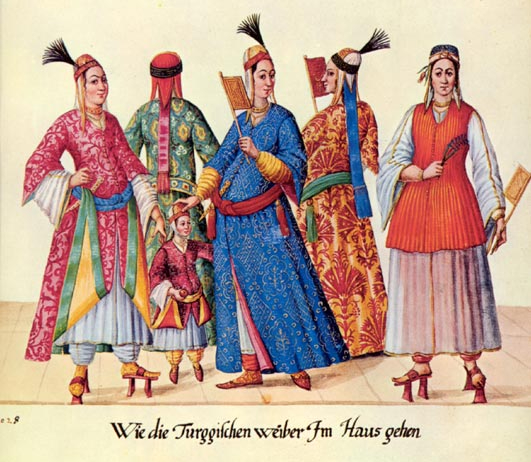
Facing is tucked up and visible on the woman on the far left.
Bump gores
The side gores in many Ottoman caftans often feature a distinctive “bump” at the hips, which contributes to the garment’s unique silhouette. This bump creates a wider hip line when the caftan is worn, which was considered fashionable during the period. While this feature is primarily found in caftans from the royal family, it is a notable characteristic that sets Ottoman caftans apart from those of other cultures. It is worth noting however that lower class garments likely had simpler gores.
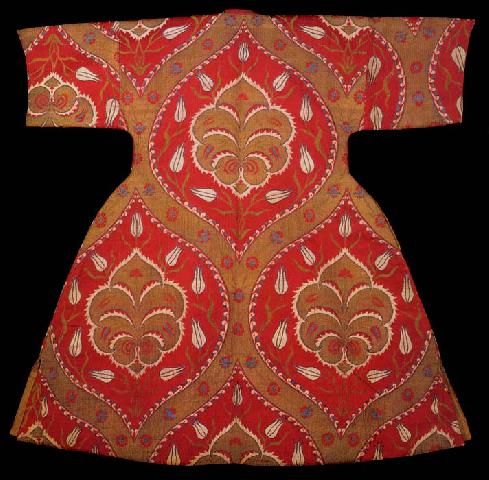
In conclusion, the Ottoman caftan is defined by several key features that give it its distinctive character and look. As you create Ottoman garb, focusing on elements like the round-cut sleeves, front gores for added fullness, decorative caprast bands, contrasting facings, and bump gores at the hips will help you achieve an authentic look to that specific time period and place.