Riddle 3: I can have arms but a body of one. Sometimes I have legs, but nay can I run.
Summary
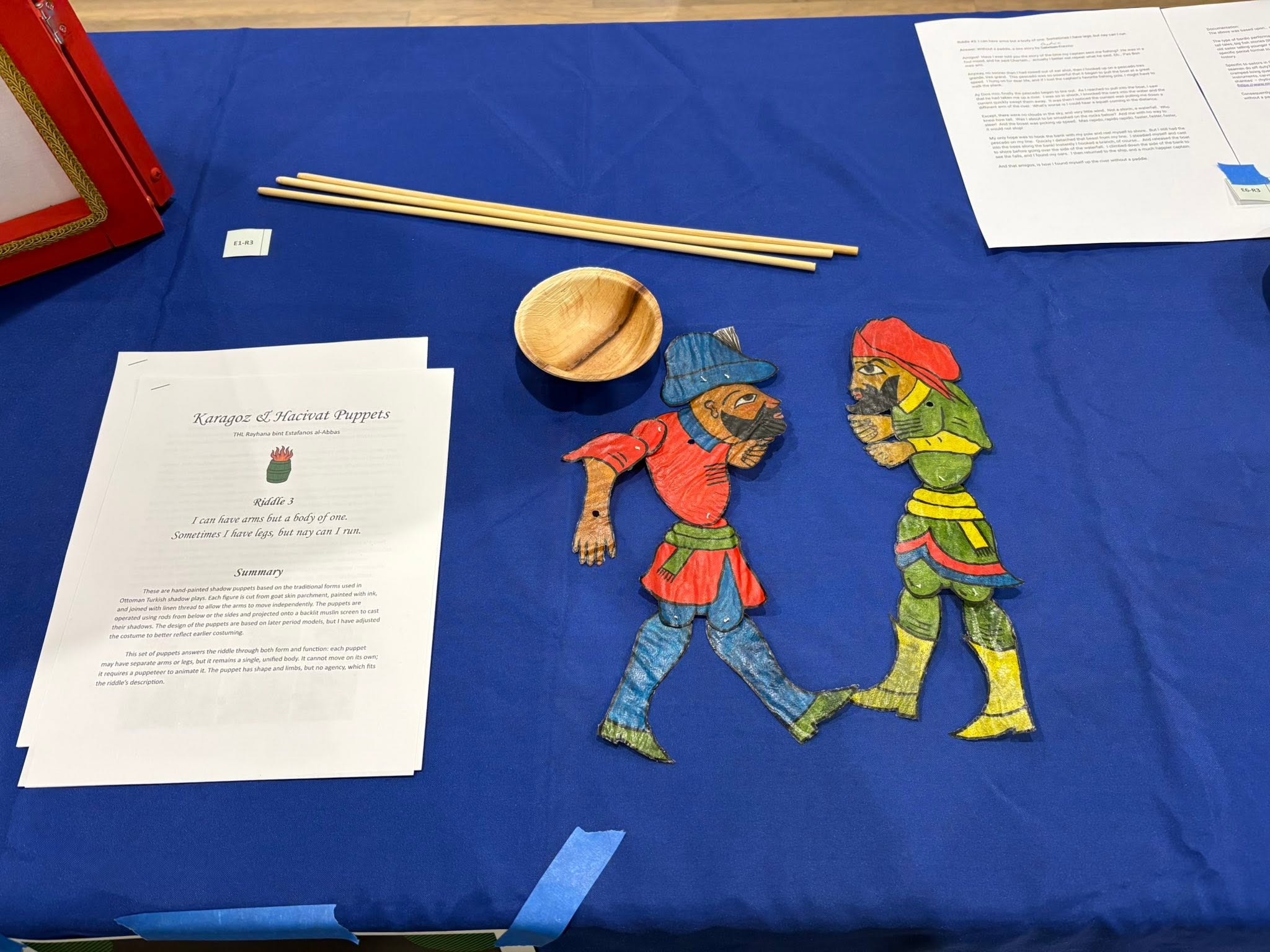
These are hand-painted shadow puppets based on the traditional forms used in Ottoman Turkish shadow plays. Each figure is cut from goat skin parchment, painted with ink, and joined with linen thread to allow the arms to move independently. The puppets are operated using rods from below or the sides and projected onto a backlit muslin screen to cast their shadows. The design of the puppets are based on later period models, but I have adjusted the costume to better reflect earlier costuming.
This set of puppets answers the riddle through both form and function: each puppet may have separate arms or legs, but it remains a single, unified body. It cannot move on its own; it requires a puppeteer to animate it. The puppet has shape and limbs, but no agency, which fits the riddle’s description.
Historical Background
Karagöz and Hacivat are the main characters in a style of Ottoman Turkish shadow play that is widely believed to date back to the 16th century. While the earliest surviving puppets and full scripts don’t appear until the 18th century, there is strong evidence that the tradition is much older.
One of the most frequently cited sources is the 17th-century writer Evliya Çelebi, who claimed that shadow plays were already popular during the reign of Sultan Selim I (early 1500s) and gained widespread appeal under his son, Suleiman the Magnificent. Whether or not that’s entirely accurate, the themes and characters clearly reflect 16th-century urban life, particularly in cities like Bursa and Istanbul.
Traditionally, the puppets were made from thin, translucent rawhide (usually camel or goat skin), and painted with natural dyes. Joints were connected with thread, and the figures were moved with rods from the sides or below. When lit from behind, they cast vivid, colorful shadows that brought each character to life. While later puppets are more ornate, earlier versions were likely simpler and more reflective of contemporary dress and materials.
Each Karagöz play follows a familiar structure: an opening introduction, a rapid-fire dialogue between Karagöz and Hacivat, a main story, and a short closing. This structure shapes the rhythm and pacing of the performance and directly influences how the puppets are built and used. Karagöz’s character is loud, physical, and impulsive, which is why his puppet includes a movable arm for gestures and bold coloring. Hacivat, in contrast, is more refined and deliberate, with smaller, more controlled movements. These traits have remained remarkably consistent across centuries of performance, and the puppet designs reflect that tradition.
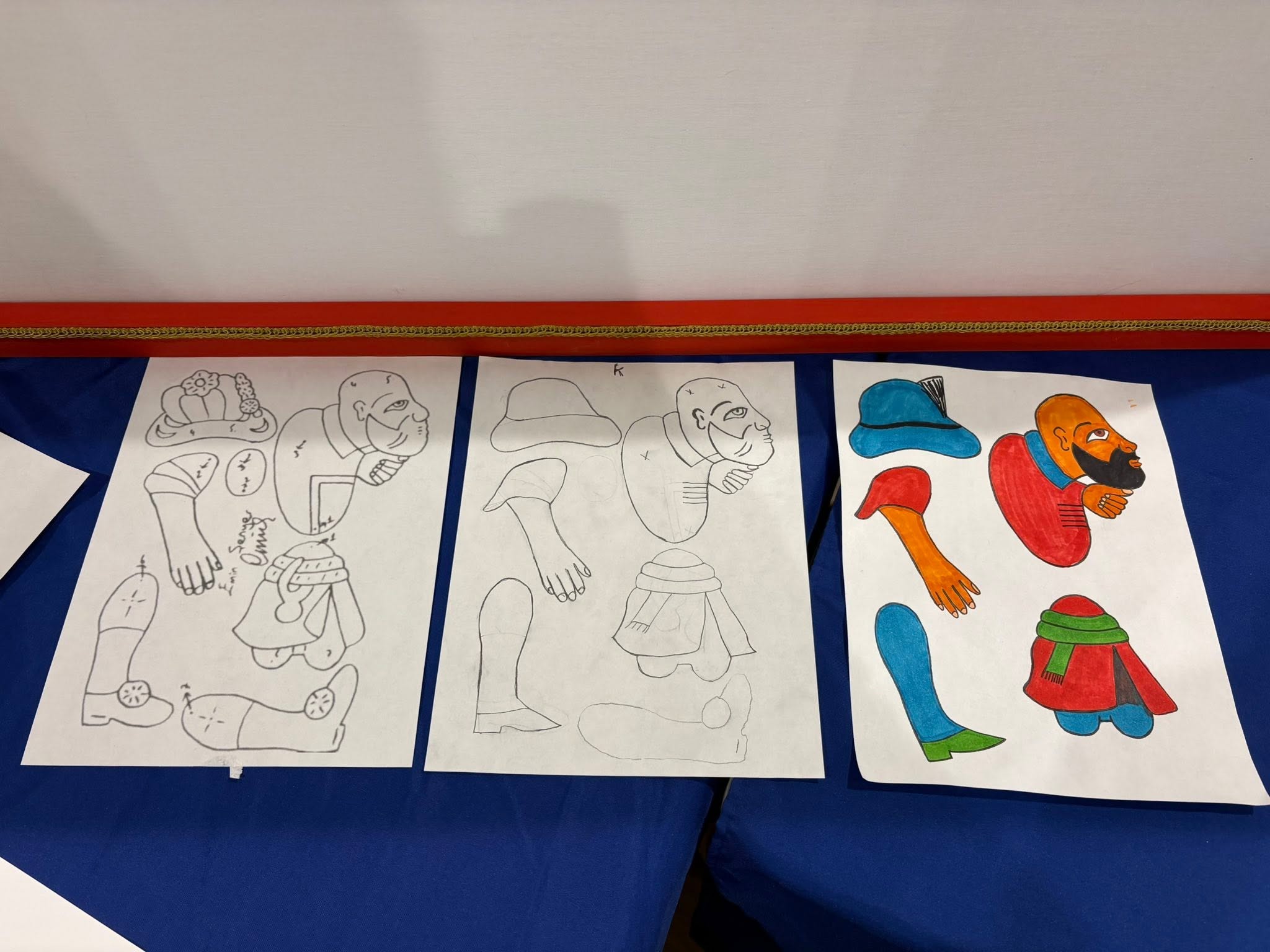
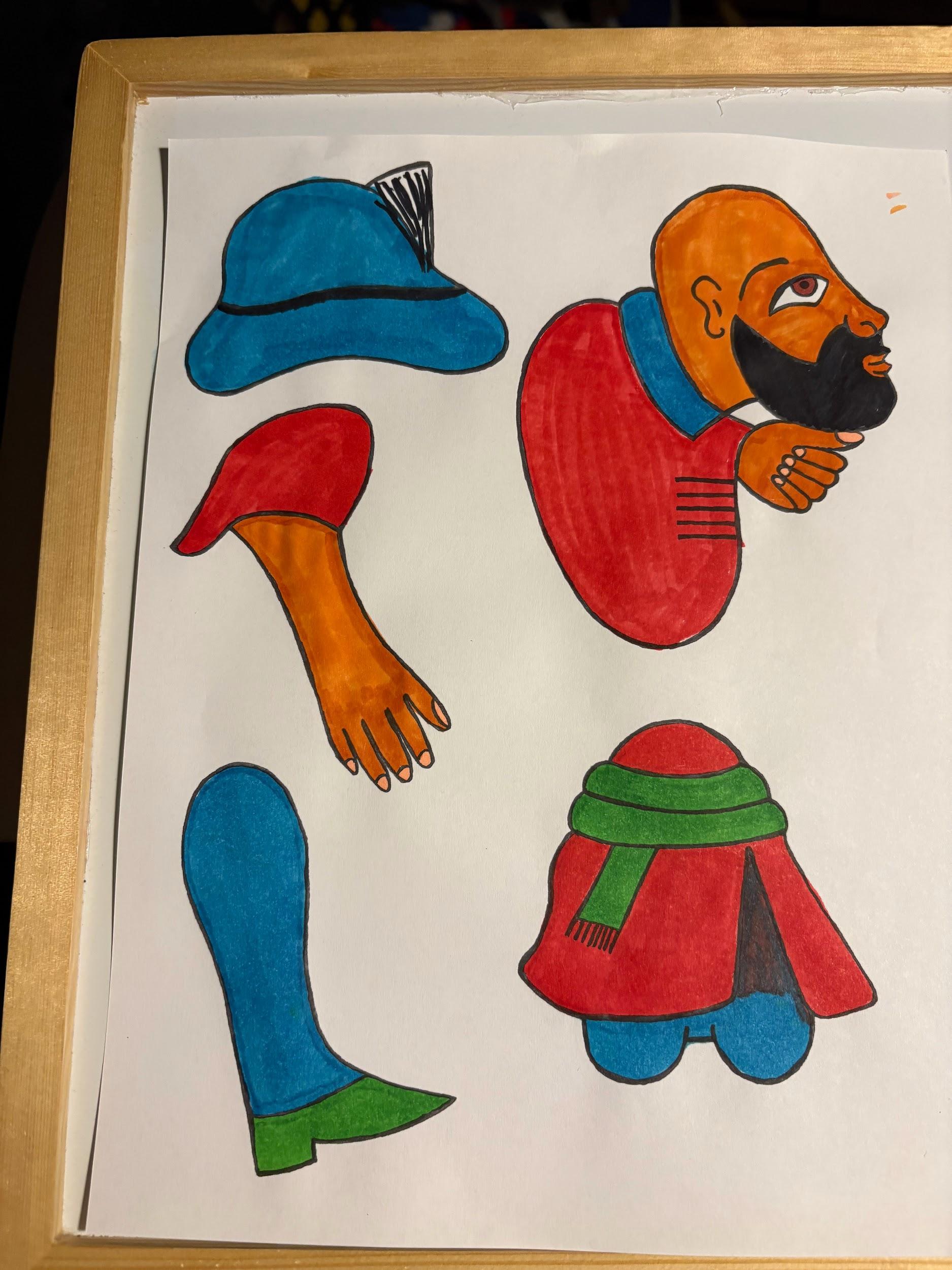
Karagöz — template, redrawn outline, and painted version
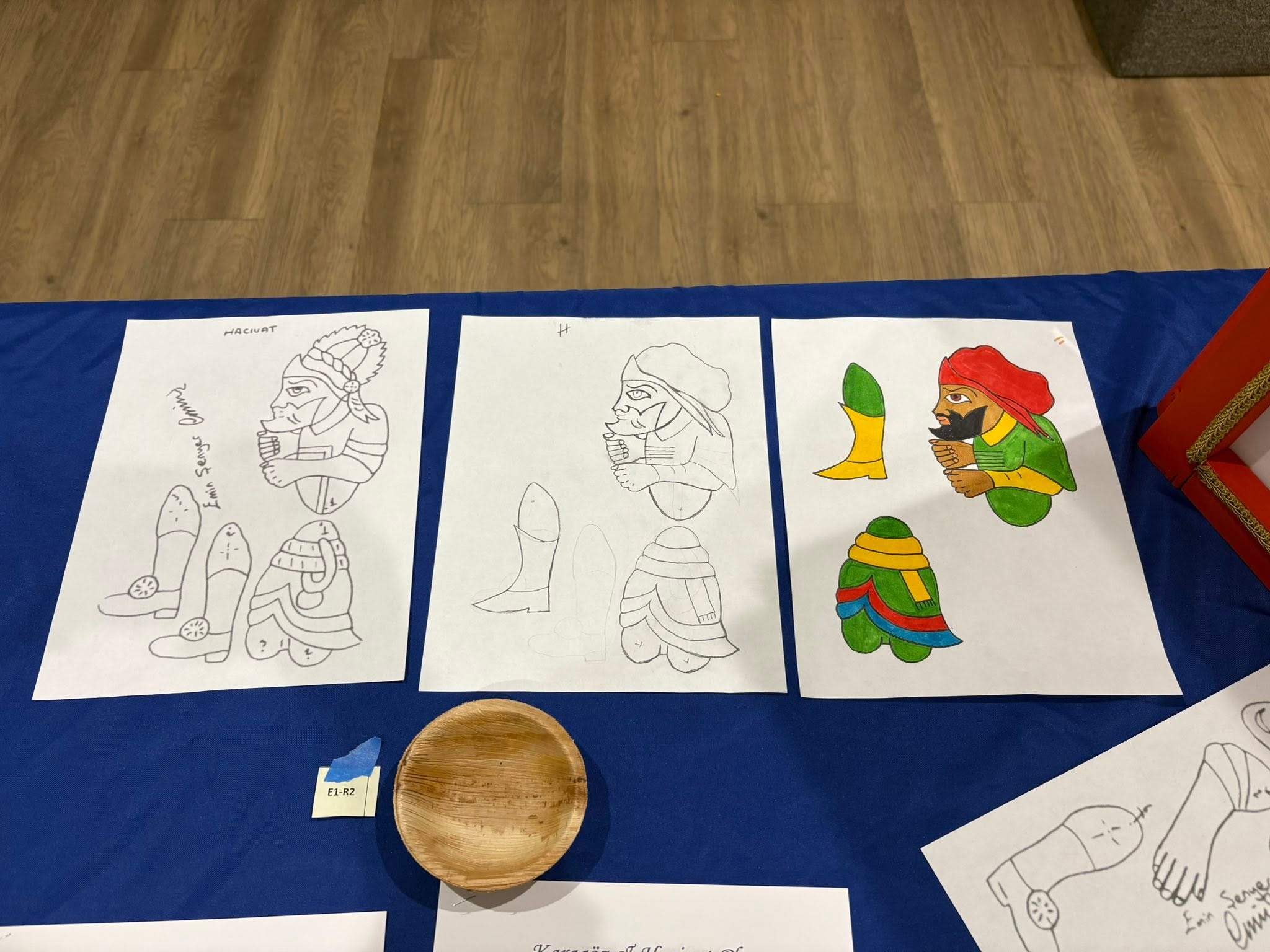
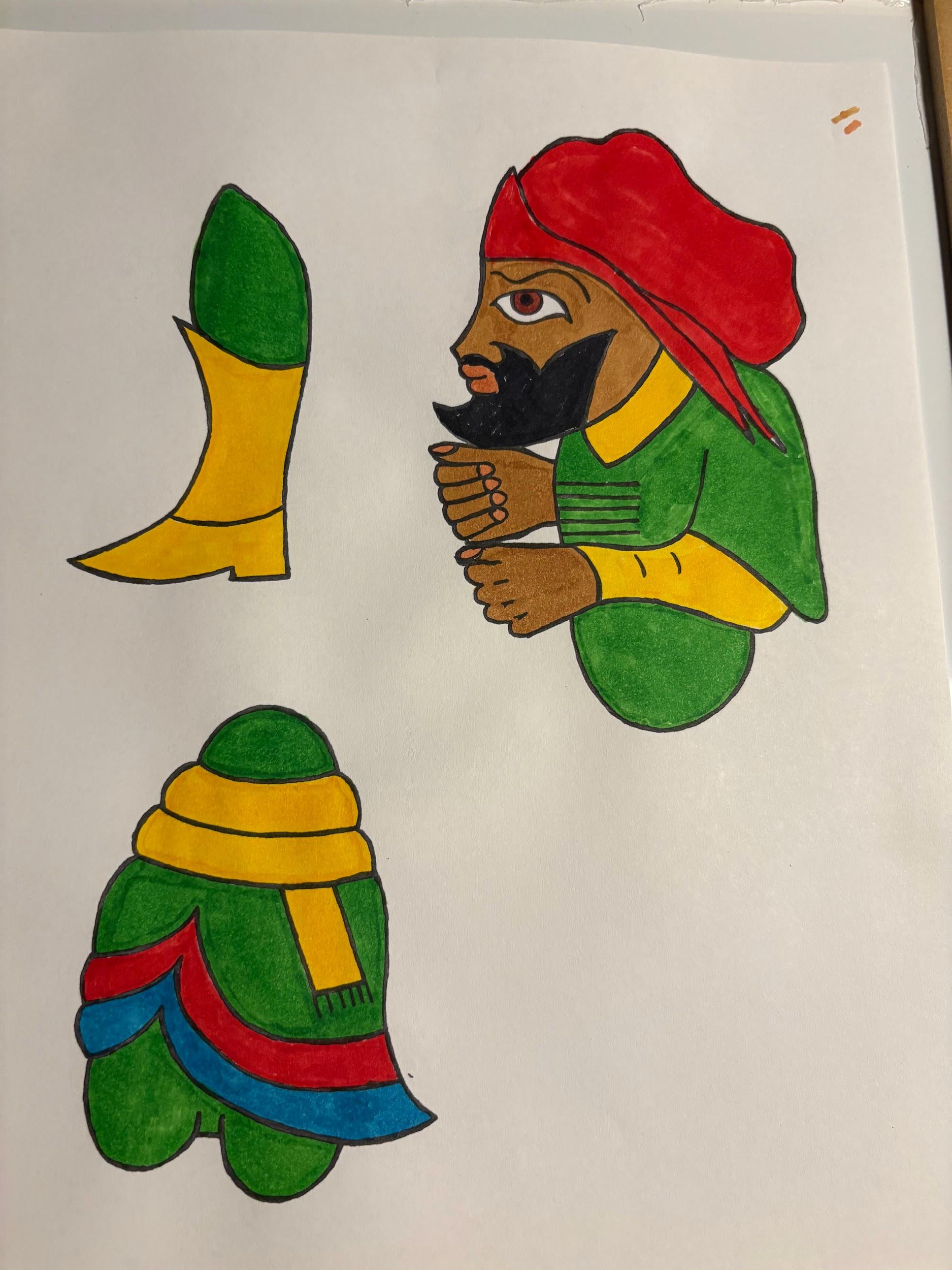
Hacivat — template, redrawn outline, and painted version
Methods
The puppet templates I started with were based on an early 18th-century example, one of the oldest surviving Karagöz figures. While the overall proportions and posture were useful, I redrew the designs to better reflect 16th-century Ottoman clothing styles. This included adapting garments and headwear to match earlier examples seen in miniature paintings and surviving garments.
Hacivat, the more refined and educated of the two characters, is dressed accordingly. He wears two layered caftans, a common marker of status and wealth in the 16th century, along with full-length boots featuring exaggerated pointed toes. His distinctive headdress—affectionately referred to as “the crab hat”—was inspired by period Ottoman headgear with dramatic wrapped shapes and extended folds, often seen in depictions of courtiers or scholars.
In contrast, Karagöz wears a single caftan, simple shoes, and a plain felt hat adorned with a peacock feather, reflecting his lower social status and working-class role. I used red as the primary color for Karagöz and green for Hacivat to further distinguish their personalities. Red emphasizes Karagöz’s impulsive, energetic nature, while green supports Hacivat’s role as the educated, composed counterpart.
Once the designs were finalized, I transferred them to flattened goat skin parchment and cut the pieces to fit within a 10-inch circle, the size of the drum heads I had on hand. After painting, I brushed each piece with a gelatin solution to mimic the look and light transmission of traditional camel skin, which was often treated with natural glues or resins. This coating reduced curling as the skins dried, added stiffness, and made the puppets more resistant to humidity. In future work, I plan to experiment with hide glue for a potentially more historically accurate finish.
Karagöz has one articulated arm, and both puppets have jointed legs. The joints are assembled with waxed linen thread, tied in small knots. I painted the puppets with acrylic inks to achieve bold, crisp colors under backlighting, balancing historical aesthetics with modern performance needs. The inks proved to be colorfast, even after the puppets were repeatedly dampened in an effort to flatten them. While the end result is functional, I am not fully satisfied with the finish and plan to explore alternative materials and methods for future versions.
For manipulation, I use simple wooden skewers. The tips are lightly cut down to a subtle point, just enough to guide them into the puppet’s joint holes without damage. Before each performance, I rub a small amount of beeswax onto the tip, giving it enough tack to “stick” to the goat skin for smooth control, without adhesives or permanent attachments.
Bibliography
- And, Metin. Karagöz: Turkish Shadow Theatre. Ankara: Dost Yayınları, 1979.
- UNIMA. “Karagöz.” World Encyclopedia of Puppetry Arts. https://wepa.unima.org/en/karagoz/
- UNESCO. “Karagöz.” Intangible Cultural Heritage Lists. https://ich.unesco.org/en/RL/karagoz-00180
- Daily Sabah. “Karagöz and Hacivat: The iconic duo of Turkish shadow puppetry.” https://www.dailysabah.com/arts/karagoz-and-hacivat