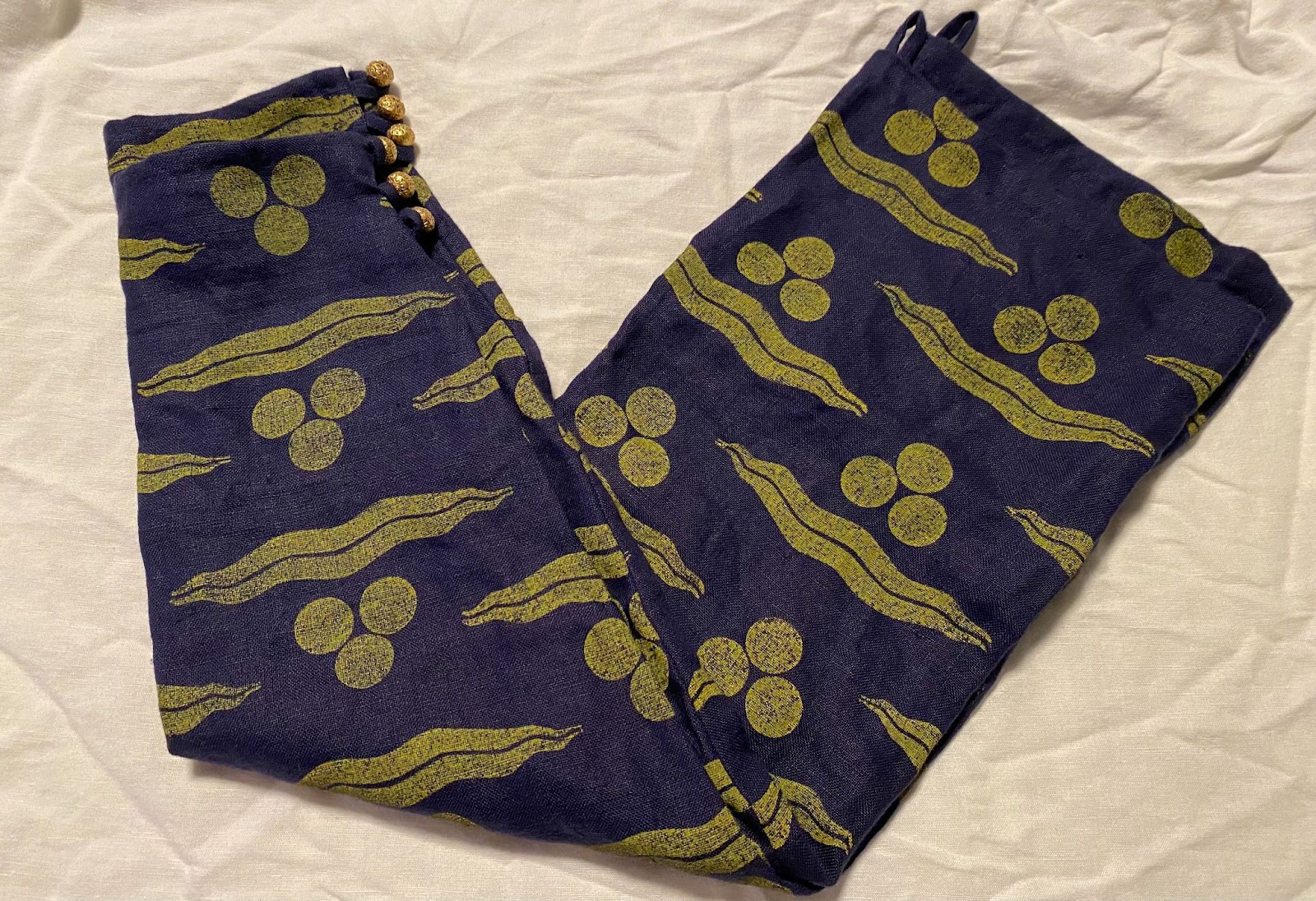
This is a pair of sleeves printed with the chintamani motif (Fig 3.), a common motif used in Ottoman Turkey. This motif was said to represent tiger stripes and leopard spots. Separate sleeves like this were attached to caftans with a button and were removed or worn depending on the weather and fashion by both men and women (Fig. 1, Fig 4). I modeled my sleeves off a pair of woven sleeves with the chintamani stripes (Fig 2.), however my version is block printed and includes the dots of the pattern as well.
Despite common use in Persia and in other European cultures at the time, unfortunately there is little evidence that block printed fabrics like this were used in the Ottoman empire. This is likely due to the fact that few garments survived, and the ones that did were court caftans owned by the sultans. Block printing was known in other countries at the time, such as India and Italy, that were in contact with the Ottomans in the medieval period (Phillips, 2009, #593). There is also evidence of block printed fabrics in Iran in the 10th or 11th centuries (Fig 5.). It is therefore reasonable to conclude that printed textiles would not have been foreign to the Ottomans, despite the lack of direct evidence.
In my reconstruction, I used linen fabric and acrylic craft paint. Linen, because of how common linen fabric was in the time period, and acrylic craft paint for the ease of use, durability, and safety. In period, they would have used a variety of paints, pigments, or inks that would not necessarily be safe to use, so I have made a concession there. I also used my serger to finish the inside seam, however the edges are all hand finished. These would have been lined in period, however in my reconstruction I have chosen not to line them due to weather concerns in Southern California. I used commercial buttons instead of cloth buttons or thread covered buttons.
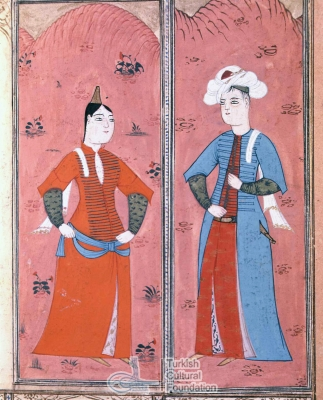
Fig 1. The album of Ahmed I, c. 1610
This is an example of separate button-on sleeves in a different color than the main caftan.
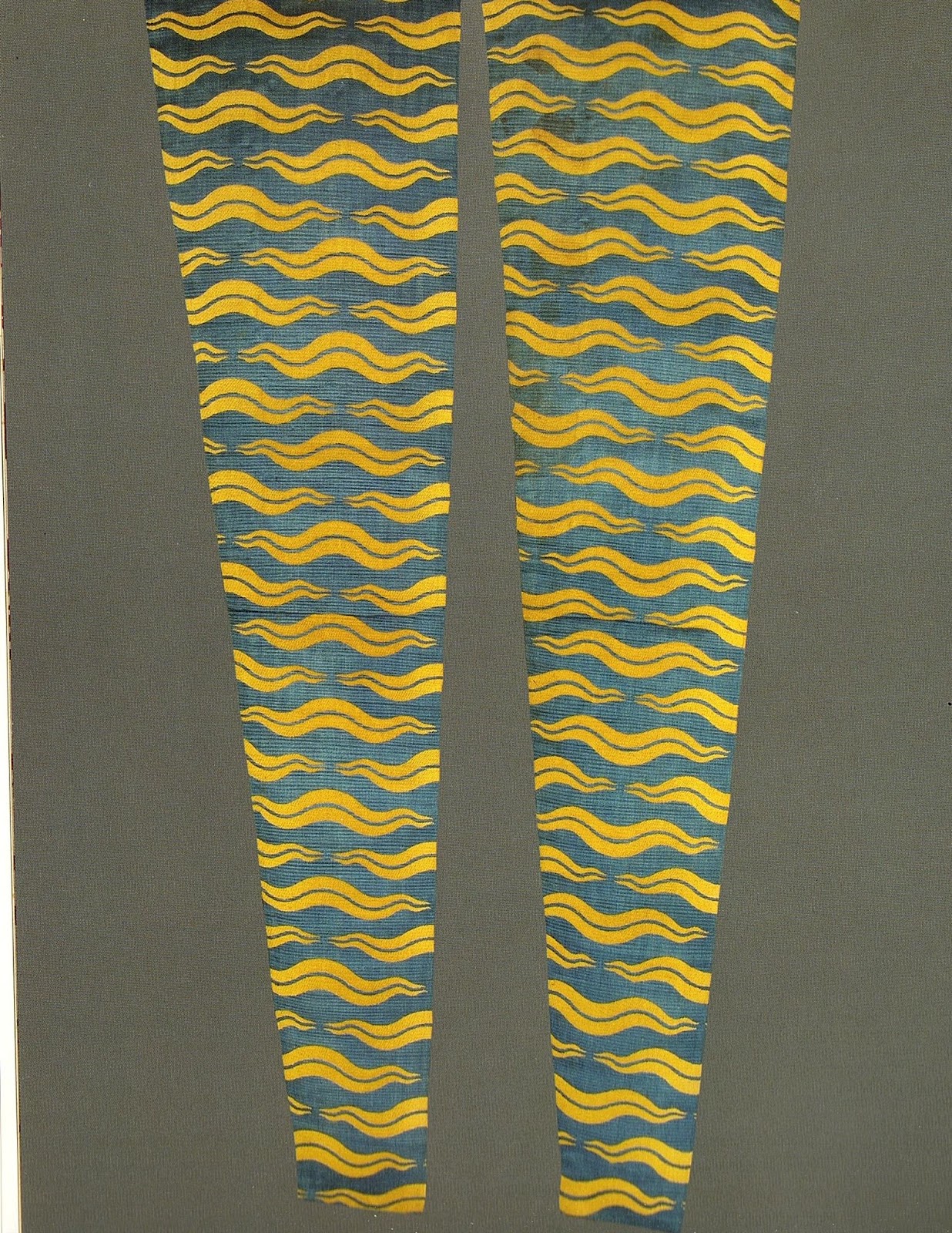
Fig 2. Topkapi Museum
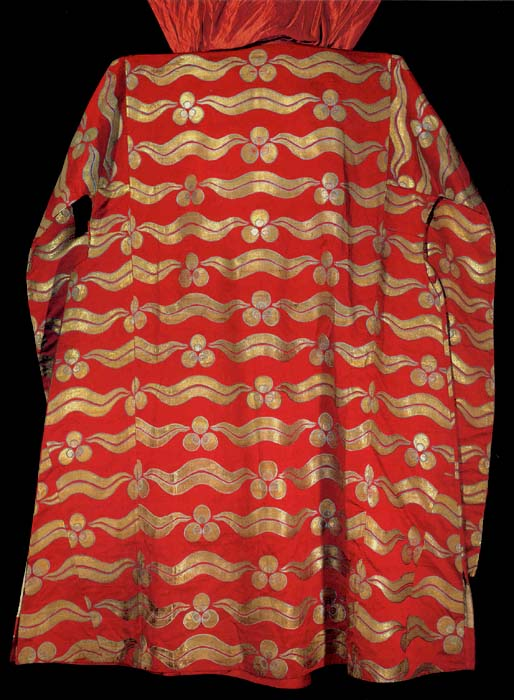
Fig 3. Topkapi Museum
Example of chintamani pattern
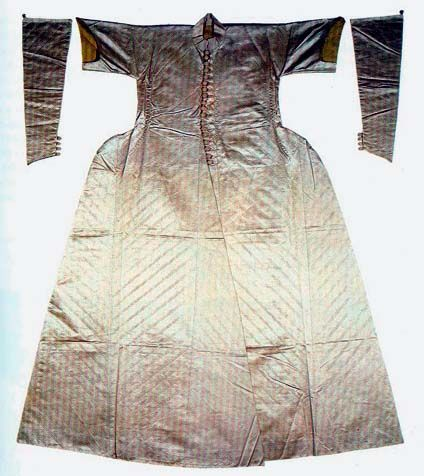
Fig 4. Topkapi Museum
Example of separate button-on sleeves.
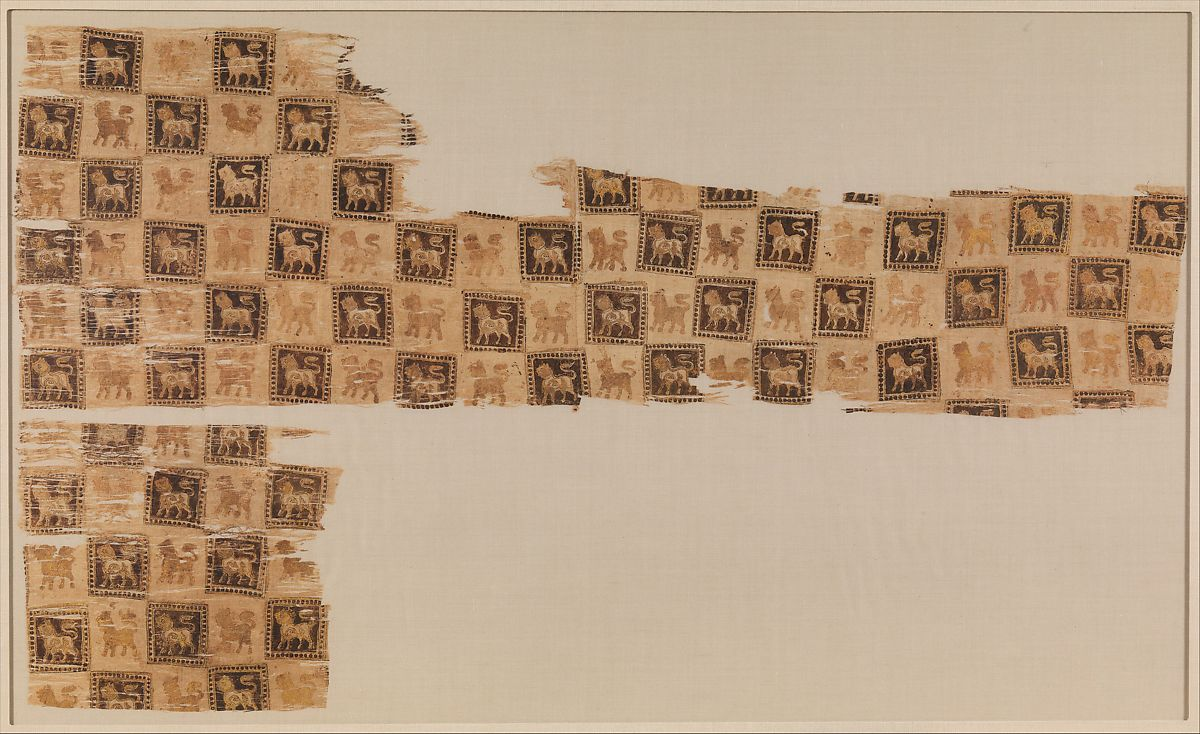
Fig 5. Printed cloth fragment. Iran, 10th-11th c. The Met
References
Phillips, A. (2009). Thirteenth International Congress of Turkish Art; Little-Know Ottoman-Period Cotton and Linen Textiles in Oxford’s Ashmolean Museum. Hungarian National Museum.